
Practical questions
Sexual wellbeing during breast-cancer care
Breast-cancer care can affect comfort, energy, body image and sexual interest during and after treatment. These concerns are valid even when cancer treatment remains the priority. Ask the oncology team how sexual-wellbeing support fits your individual treatment rather than starting a product or waiting until every cancer appointment is finished.
General information for adults. Not a substitute for medical assessment.
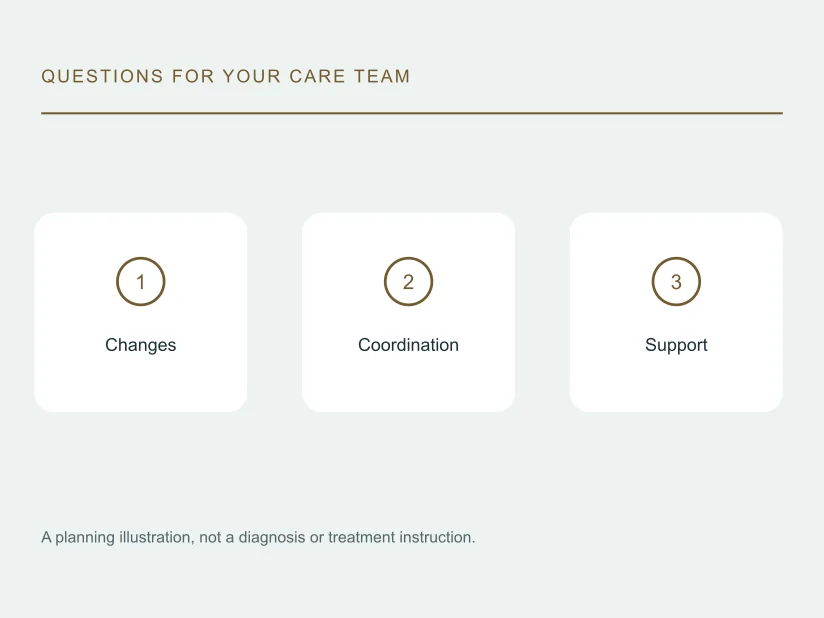
Name the change that matters to you
Separate dryness, pain, altered sensation, fatigue, desire and concerns about scars or appearance. Mention when each change began and which treatments were involved. Not every person has the same effects, and a partner’s expectations do not determine readiness. You can ask for a private conversation, invite a partner if you want or discuss comfortable intimacy that does not depend on penetration or a particular body response.
Coordinate products with cancer care
Ask which comfort measures are suitable and whether any proposed vaginal, hormonal or complementary product needs oncology approval. Do not assume a local product is irrelevant to the cancer plan or that natural branding means safe. The responsible team should review your cancer type, treatment and other medicines before a decision. This guide offers no hormone recommendation or assurance that a product is appropriate after breast cancer.
Keep follow-up and practical questions together
Ask who can help with persistent pain, pelvic-health concerns, mood or relationship strain and how to contact them between visits. Discuss contraception and fertility separately from changes in periods or desire; the oncology team should explain what applies during treatment. Report new bleeding, sores, infection symptoms or worsening discomfort rather than attributing everything to treatment. The goal is supportive, coordinated care—not a guaranteed return to a previous sexual routine.
Common questions
Should I wait until treatment ends to mention sexual concerns?
No. Raising them during care helps the team coordinate safe support and timing.
Is a vaginal or herbal product automatically safe?
No. Ask the oncology team to review the specific product and your treatment context.
Does reduced desire mean I must try harder?
No. Readiness, consent and comfort matter; fatigue or distress can be discussed without pressure.
Sources and information limits
Sources support general medical principles, not the UAE booking policies or service availability. Confirm instructions and local arrangements with the care provider. The update date does not claim clinician review.
Content policy and review statusQuestions before arranging an appointment?
Enquire about the next steps and availability. An enquiry does not confirm a booking or diagnosis and is not an emergency service.